Table of Content

What is AI dynamic pricing?
AI dynamic pricing uses machine learning to adjust product prices automatically as demand, competitor prices, stock and costs change. Unlike fixed if-then repricing rules, a model estimates how shoppers respond to each price. Sellers keep control with a price floor, a ceiling and caps on each change, and by pricing on market conditions, not on who the shopper is.
TL;DR
- Definition: AI dynamic pricing is dynamic pricing, which HBS Online describes as a strategy that bases prices on evolving market trends, with a model estimating how demand responds to each price point.
- How it works: sales history, stock, costs and competitor prices feed a demand model, the model proposes a price, and guardrails decide whether that price goes live. The demand measure at the center is price elasticity.
- Rules or AI: rules are easier to audit and suit small, stable catalogs. Machine learning suits large or volatile catalogs. A repricing vendor, Repricer.com, recommends a hybrid in which rules set the outer limits and the model works inside them.
- Price war: a price floor, a ceiling and a cap on each change stop two repricers from chasing each other down. Amazon requires a minimum price on its Automate Pricing rules and recommends a maximum.
- Legal: pricing that responds to market conditions is generally lawful, according to Holland and Knight. The exposure is shared pricing tools that align competitors, and prices set from personal data.
- Rollout: start with a small set of products, run recommendation-only first, judge results on profit dollars rather than revenue, and keep a rollback.
- Build option: if your pricing logic has to read your costs, ERP and store, our team builds it as AI development services.
What is AI dynamic pricing for ecommerce sellers?
AI dynamic pricing is a form of dynamic pricing for ecommerce that changes online prices on a schedule or in near real time, using a model that learns how your shoppers react. It sits at the end of a progression: fixed prices, then manual price changes, then rule-based repricing, then a model that proposes the price. HBS Online defines dynamic pricing as a strategy that bases the prices of products or services on evolving market trends, and lists supply and demand, competitor pricing and inventory levels among the factors. The AI part is how the price is chosen. A rule says “match the lowest rival.” A model asks which price is likely to earn the most profit given what it has seen.
These terms are often used as if they meant the same thing. They do not, and the difference matters when you reach the legal section of this guide.
| Term | What it means | Who sees a different price? |
|---|---|---|
| Dynamic pricing | Prices that change with market conditions such as demand, time, stock or competitor prices. | Nobody in particular. Everyone who shops at the same moment sees the same price. |
| Repricing | Software that changes marketplace or store prices by rules you set, such as “stay within 2 percent of the lowest rival, never below my floor.” | Nobody in particular. |
| AI dynamic pricing | Dynamic pricing in which a machine learning model estimates demand and proposes the price, usually inside rule-based limits. | Nobody in particular, if you design it that way. |
| Personalized or surveillance pricing | Prices set from personal data such as browsing history, location or purchase history. Holland and Knight says the price then varies with who the consumer is. | Each shopper can see a different price. |
Most sellers want the first three rows and should stay away from the fourth. New York law defines personalized algorithmic pricing as dynamic pricing set by an algorithm that uses personal data, so the line between the third and fourth rows is the one to design with care.
How does AI dynamic pricing work for ecommerce stores?
An AI dynamic pricing system runs the same loop on every product: collect signals, estimate demand, choose a price, check it against guardrails, publish it, and measure the result. The steps below follow that loop.
- Collect signals. Inputs include your own sales history by price, current stock, landed cost and fees, and competitor prices. Competitor data is a separate job from the pricing decision, and our competitor price monitoring guide covers how teams collect it and where the legal limits sit. Web scraping tools for price data are one way to feed it.
- Estimate demand. The model estimates how many units you sell at each price. The standard measure is price elasticity of demand, explained just below.
- Choose a price. The model proposes a price that serves a goal you set, such as profit per product, sell-through before a season ends, or marketplace Featured Offer share. On Amazon, the Automate Pricing tool already offers rule types based on competitive prices (Competitive Featured Offer, Competitive Lowest Price and Competitive External Price) and a rule based on sales units.
- Apply guardrails. A floor, a ceiling, a maximum change per adjustment and a list of excluded products decide whether the proposed price is allowed. Guardrails are covered in detail below.
- Publish everywhere at once. A new price has to reach your store, your marketplaces and your ad feeds together. Google says price mismatches often happen when the site changes, such as a sale starting or ending, and the feed does not, and suggests the Inventory API for faster updates when prices change several times a day. Automatic item updates fix only minor discrepancies.
- Measure and learn. The system compares results against a control group of products or time periods, then retrains. Without a control group you cannot tell a pricing effect from a seasonal one.
Stock matters as much as demand. A price that ignores a stockout sells the last unit too cheaply, so the inventory feed belongs in the model. Our guide to ecommerce inventory management practices covers the stock side.
What is price elasticity and why does the model need it?
Price elasticity of demand measures how strongly buyers respond to a price change. OpenStax Principles of Economics defines it as the percentage change in quantity demanded divided by the percentage change in price, reported as an absolute value. Demand is elastic when the result is greater than one, inelastic when it is less than one, and unitary when it equals one.
The result decides whether a price increase helps. The example below uses hypothetical numbers for one product with a landed cost of $30.
| Scenario | Price | Weekly units | Revenue | Profit per week |
|---|---|---|---|---|
| Current price | $50 | 100 | $5,000 | $2,000 |
| Price raised 10 percent | $55 | 85 | $4,675 | $2,125 |
Units fell 15 percent after a 10 percent increase, so elasticity is 1.5 and demand is elastic. Revenue fell by $325 while profit rose by $125, because each sale earns $5 more. A system that optimizes revenue would reject the higher price. A system that optimizes profit would accept it. Choosing the goal is a business decision that the model cannot make for you.
Rules or machine learning: which should set your prices?
Use rules when your catalog is small, your competition is stable or you must explain every price change, and use machine learning when the catalog is large or the market moves faster than you can write rules. Most stores end up with both. Repricer.com, a repricing vendor that sells both approaches and lists a September 2026 update on its comparison, says rule-based repricing fits audit needs, simple stable competition, private-label products with an explicit floor and new listings with no price history. It says AI repricing fits volatile listings with many sellers, large catalogs and demand patterns tied to time of day. Treat those as vendor claims and test them on your own products.
| Approach | What decides the price | Best for | Main weakness |
|---|---|---|---|
| Rules only | Your if-then logic, such as match or undercut a rival within limits. | Small catalogs, stable competition, products where every change must be explainable. | Rules go stale. Two rule sets that undercut each other can chase prices down to the floor. |
| Machine learning only | A demand model trained on your sales, stock and market data. | Large catalogs and volatile markets. | Harder to audit, and a bad training period teaches bad prices. |
| Hybrid | Rules set the floor, ceiling and exclusions. The model picks the price inside them. | Most ecommerce sellers, according to the vendor guidance above. | Needs an owner for both the rules and the model. |
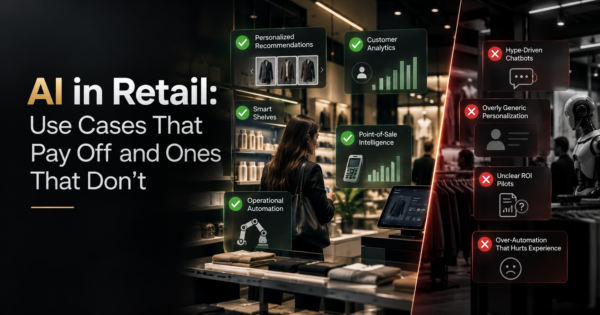
The hybrid is also the safer design. A model can only make an expensive mistake inside the limits you gave it. The same logic applies to catalogs on Shopify, Magento and WooCommerce, where prices live in the store and a pricing engine has to write to them through the platform API. Our overview of AI use cases for ecommerce places pricing among the other automation jobs, and AI in retail use cases shows where AI pays off and where it does not.
Which dynamic pricing strategy should you start with?
Start with the dynamic pricing strategy that responds to a signal you already trust. Shopify lists six types: time-based, demand-based, inventory-based, geographic, segment and volume pricing. Time, inventory and demand signals are market conditions, which Holland and Knight describes as the generally lawful kind of dynamic pricing. Segment pricing becomes risky when the segments are built from personal data, so define segments by order size or product, not by shopper identity.
How do you avoid a price war with dynamic pricing?
You avoid a price war by giving the system limits it cannot cross and a goal other than being cheapest. A price war happens when sellers keep cutting prices to beat each other until margins disappear, and automated repricing can make it faster because both sides react in minutes. The controls below put a boundary around that behavior.
- Set a price floor on every product. Amazon lists a predetermined minimum price as a requirement for its Automate Pricing rules, and recommends a maximum price as a guardrail to stay competitive without hurting margins. Use the same discipline in your own store.
- Calculate the floor from real costs. Floor = landed cost + marketplace and payment fees + shipping you absorb + the minimum profit you will accept. For a product with a $30 landed cost, $5 in fees and a $5 minimum profit, the hypothetical floor is $40, and no rule or model may go below it.
- Cap each change. Shopify’s guidance lists the direction prices may move, the maximum change per adjustment, floor and ceiling prices, excluded products and channels, an approval threshold for human sign-off and a rollback condition as the core guardrails.
- Do not chase every competitor. Match the rivals who share your product, condition and service level. A seller with slower shipping or no returns is not competing for the same buyer.
- Compare total price, not item price. Shipping, coupons and handling decide the real offer. Amazon notes that its Fair Pricing Policy assessment considers shipping and handling along with the item price.
- Pause on anomalies. If a price hits its floor repeatedly or changes more often than expected, stop automatic changes and send an alert to a named owner.
There is a second reason to be careful. In a simulation published in the American Economic Review in October 2020, Calvano, Calzolari, Denicolo and Pastorello found that Q-learning pricing algorithms in a repeated-competition model consistently learned to charge prices above competitive levels without communicating, and sustained them with a punishment-then-recovery pattern. That is a laboratory model, not a finding about any commercial tool. It shows why regulators watch algorithmic pricing, and the next section explains what they say.
Is AI dynamic pricing legal for ecommerce sellers?
Yes, pricing that responds to market conditions is generally lawful in the United States, and the legal risk sits in two specific practices: coordinating prices with competitors and setting prices from personal data. Holland and Knight says dynamic pricing responds to market conditions rather than individual identity and is generally lawful and not the primary target of enforcement. The same firm lists what regulators do target: personalized pricing based on consumer data, undisclosed fees, discriminatory pricing and promotional allowances, algorithmic collusion through shared pricing vendors, and tools with disparate impact on protected classes. This section is general information as of November 2026, not legal advice, and counsel should review a pricing system before it goes live.
Can a shared pricing tool create price-fixing risk?
It can, if competitors jointly rely on the same tool and feed it sensitive data. The FTC defines price fixing as an agreement among competitors, written, verbal or inferred from conduct, and says matching a competitor’s price is acceptable as long as the decision was not based on any agreement or coordination with a competitor. Independent repricing against public prices is a different thing from an agreement.
The Justice Department has addressed the shared-tool version directly. In a March 1, 2024 Statement of Interest in a case against a rental-pricing software company, the United States argued that firms jointly delegating key pricing decisions to a common algorithm can face per se price-fixing liability even if they keep some authority to deviate, and wrote that automating an anticompetitive scheme does not make it less anticompetitive. The same filing says not every use of an algorithm to set price is a per se violation. A statement of interest is the government’s legal argument, not a court ruling.
The leading enforcement example involves apartment rents, not online retail. On November 24, 2025 the Department of Justice announced a proposed settlement with RealPage. DOJ alleged that the software relied on nonpublic, competitively sensitive information shared by landlords and included features that limited rent decreases and aligned pricing among competitors. The proposed decree would bar use of competitors’ nonpublic data to set rents in real-time operation, limit model training to data at least 12 months old, and add a court-appointed monitor, subject to court approval. DOJ followed with a proposed decree with Pinnacle on September 4, 2026. For an online seller, the lesson is practical: ask any pricing vendor whether it pools nonpublic data from your competitors, and avoid vendors that do.
What do regulators say about pricing from personal data?
Federal regulators treat undisclosed personalized pricing as a possible Section 5 violation, and several states have passed laws since 2025. On August 19, 2026 the FTC sought comment on a proposed enforcement policy statement. It says businesses that fail to tell consumers how their personal data is being used to set a price may violate the FTC Act, and that consumers expect prices to change with supply and demand rather than with their browsing or purchase history. The FTC also said it lacks legal authority to ban personalized pricing in all circumstances. As of Sidley’s October 27, 2026 summary the statement had not been finalized.
The FTC’s January 17, 2025 interim staff findings showed why attention rose: third-party intermediaries serving at least 250 clients could adjust and target prices using data such as location, demographics, browsing patterns and shopping history. The findings were interim and the examples hypothetical.
| Jurisdiction | What the law does | Status (as of November 2026) |
|---|---|---|
| New York | Requires the statement “THIS PRICE WAS SET BY AN ALGORITHM USING YOUR PERSONAL DATA” when a price is personalized with personal data. The Attorney General can seek civil penalties of up to $1,000 per violation. See General Business Law section 349-a. | In effect since November 2025, per Holland and Knight. |
| Maryland | Prohibits personalized higher prices using personal data for food retailers and third-party delivery services. | Signed April 28, 2026, effective October 1, 2026, per Sidley. |
| Connecticut | Prohibits surveillance pricing by retail sellers and third-party delivery services. | Public Act 26-130. Sidley reports surveillance pricing provisions effective July 1, 2027, while Holland and Knight reported October 1, 2026, so confirm the date. |
| New Jersey | Prohibits personalized pricing for groceries and other necessities, with a private right of action. | Signed July 23, 2026, effective August 1, 2027, per Sidley. |
| New York (pending) | The One Fair Price Act would prohibit using personal data to facilitate surveillance pricing. | Passed the legislature in June 2026 and awaited the governor as of Sidley’s summary. |
Eleven other states introduced surveillance-pricing bills in 2026, and a Senate Judiciary hearing on the subject took place on August 4, 2026, according to Consumer Finance Monitor. Check the rules in each state where you ship before you use any customer-level data in a price. Our guide to ecommerce personalization strategies shows how to personalize offers, content and recommendations without personalizing the price itself.
What do marketplaces and ad platforms require?
Marketplaces and ad platforms add their own price rules on top of the law. Amazon’s Automate Pricing guidance tells sellers to make sure prices comply with its Fair Pricing Policy, which addresses excessive pricing and misleading discounts. Google Merchant Center flags a price status as inaccurate when the feed price and the landing page price differ, so a dynamic price has to update the feed at the same moment it updates the page.
What should a seller put in place before turning on automatic prices?
- Price on products and market signals only. Do not use browsing history, device type, location or inferred income in any price.
- Show every shopper the same price at the same moment, for the same product and shipping destination.
- Set price decisions independently. Never discuss prices, discounts or pricing plans with a competitor.
- Ask each pricing vendor in writing what data it pools across customers and whether any of it is nonpublic competitor data.
- Keep an audit log of every price change with the rule or model version that caused it.
- Add a cap or pause rule for emergencies and supply shocks.
- Have counsel review the setup, and review it again when a state where you sell passes a new law.
Which dynamic pricing examples are documented, and what do they teach?
Three documented design patterns and one enforcement case show how dynamic pricing is built and where it goes wrong. The table keeps to what each organization has published.
| Example | What the source says | What a seller can take from it |
|---|---|---|
| Uber surge pricing | Uber says surge pricing goes into effect automatically when more riders than available drivers are in an area, prices update in real time and are calculated hyperlocally, and surge is based on marketplace conditions, not a rider’s personal information. Uber can cap surge in an area during major emergencies. | Price from supply and demand signals, tie the signal to a small area or product, and build a cap for emergencies. |
| Amazon Automate Pricing | Amazon’s seller guidance (published February 24, 2025) describes rules based on the Featured Offer, the lowest price, an external price or sales units. A minimum price is required and a maximum is optional. | A repricer without a floor is a liability. Make the floor mandatory in any system you build. |
| Google Merchant Center feeds | Google says an inaccurate price status often comes from a feed that does not reflect a site change, and suggests the Inventory API for prices that change several times a day. | Price changes must publish to the store and the feed together, or ads and listings get flagged. |
| RealPage rental pricing | DOJ alleges the software used landlords’ nonpublic data and features that aligned pricing among competitors, and has proposed a decree (DOJ release). | Do not pool competitors’ nonpublic data. Price independently. |
These dynamic pricing examples are not equal. The first three are design patterns you can copy. The last is a boundary. Our overview of AI for ecommerce also covers dynamic pricing as one of several jobs a store can automate.
Should you buy a repricer or build a custom pricing engine?
For dynamic pricing for ecommerce, buy a repricer when you sell on marketplaces and need rule-based or AI repricing against a competitor set, and build a custom pricing engine when prices depend on your own costs, contracts, ERP data and store logic. A packaged tool is faster to start. A custom build fits when the tool cannot read what decides your margin.
| Question | Points to buying a repricer | Points to a custom build |
|---|---|---|
| Where do you sell? | Mostly on one or two marketplaces with standard repricing rules. | Your own store plus marketplaces, B2B price lists or several channels. |
| What decides your floor? | A single cost per product. | Landed cost that changes by supplier, shipment, tariff or volume tier, held in an ERP. |
| How often do prices change? | Many times a day against rivals. | On a schedule tied to stock, promotions or contract terms. |
| What must you explain? | Rule logs are enough. | Every price change needs a documented reason for audit or a buyer’s question. |
| What is missing today? | Nothing, a tool will do the job. | A link between pricing, inventory and finance data. |
A custom build usually has five parts: a data pipeline that pulls cost, stock and sales data, a demand model, a guardrail layer, an approval and audit workflow, and a connector that publishes prices to the store and ad feeds. Our team builds these through AI development services and connects them to your platform and back office through AI integration services. If the store itself needs work first, our ecommerce development services cover it, and ecommerce ERP integration methods explain how cost data reaches a pricing engine. The approval and alert steps are the kind of work covered under AI workflow automation.
How do you roll out AI dynamic pricing without hurting margin?
Roll out AI dynamic pricing in stages, starting with recommendations only, on a small set of products you can watch closely. The sequence below keeps a bad model from touching your whole catalog.
- Pick the goal. Choose profit dollars per product, sell-through by a date or Featured Offer share. Do not optimize revenue alone, as the elasticity example showed.
- Choose a pilot set. Select products with enough sales history to measure and enough margin to absorb a mistake. Leave out products tied to contracts, promotions or supplier price rules.
- Set the guardrails. Write down the floor, ceiling, maximum change, excluded channels, approval threshold and rollback condition for each product group, and name an owner. Shopify’s guidance also recommends documented rule sets so each price change traces back to its rule.
- Run in recommendation mode. Let the system propose prices for a few weeks while a person approves or rejects them. Record how often you disagree and why.
- Test against a control group. Hold back similar products at your current price so a seasonal swing does not look like a pricing win.
- Go live in steps. Allow automatic changes on the pilot set, keep the cap on change size, and widen the catalog only after the results hold.
- Review on a schedule. Check profit dollars per product, units, conversion rate, Featured Offer or Buy Box share, price-change counts, floor hits, and refunds or support tickets that mention price, then retrain or retune the guardrails.
Pricing vendors publish lift figures from their own customers, and those figures are self-reported. Your own control-group test is the only result that applies to your store.
Frequently Asked Questions
Is dynamic pricing legal?
Dynamic pricing that responds to market conditions such as supply, demand and time is generally lawful in the United States, according to Holland and Knight. The risk sits in two places: coordinating prices with competitors, including through a shared pricing tool, and setting prices from personal data without proper disclosure. Several states now regulate personal-data pricing, so check the rules where you sell and ask counsel to review your setup.
What states are banning dynamic pricing?
No state bans dynamic pricing as such. States are restricting surveillance pricing, which uses personal data. As of November 2026, Maryland has restricted it for food retailers and delivery services since October 1, 2026, Connecticut and New Jersey have passed laws with later effective dates, and New York requires a disclosure label and has a further bill awaiting its governor, per Sidley and Holland and Knight.
Will they make dynamic pricing illegal?
A ban on all dynamic pricing is unlikely, because the FTC says it lacks legal authority to ban personalized pricing in all circumstances and its proposed statement treats supply and demand price changes as normal. Congress is paying attention, though. A Senate Judiciary hearing on August 4, 2026 showed bipartisan concern about surveillance pricing, according to Consumer Finance Monitor, so rules on personal-data pricing are likely to keep expanding.
How is dynamic pricing allowed?
Antitrust law targets agreements among competitors, not a company that sets its own prices independently, and the FTC says matching a competitor’s price is fine as long as the decision rested on no agreement or coordination. The FTC also says consumers expect prices to change with supply and demand. What is not allowed is deceiving shoppers about a personalized price or fixing prices with rivals.
What is bad about dynamic pricing?
Dynamic pricing can erode trust when shoppers see prices vary by person or without explanation, and it can erode margin when automated repricers chase each other down in a price war. It also carries legal risk if the system uses personal data or shared competitor data. Floors, ceilings, change caps, same-price-for-everyone rules and an audit log reduce each of those risks.
What is dynamic pricing with an example?
Dynamic pricing means the price changes with conditions. Uber describes the clearest case: surge pricing starts automatically when more riders than drivers are in an area, updates in real time and is based on marketplace conditions, not a rider’s personal information. In ecommerce, an Amazon Automate Pricing rule can follow the Featured Offer price down to a minimum price the seller sets.
Are stores really doing dynamic pricing?
Yes. Uber and Amazon both document it, and the FTC’s January 2025 interim staff findings said third-party intermediaries serving at least 250 clients, including grocery and apparel retailers, could adjust and target prices. How many stores use personal data to do it is a separate question, and the FTC said its examples were hypothetical.
Is dynamic pricing ethical?
It depends on what drives the price and whether shoppers can see it. Price changes tied to supply, demand, stock and cost are what the FTC says consumers expect. Prices tied to a person’s data and not disclosed are what regulators are pursuing. Good practice is the same price for everyone at the same moment, a visible reason for sales and surges, and a cap in emergencies, the kind of cap Uber says it can apply.
Bottom Line
AI dynamic pricing works when a model proposes prices inside limits you set, on signals about the market and not about the shopper. The floor, the ceiling and the cap on each change are what keep it from turning into a price war, and an audit log is what lets you explain any price you charged. Keep your pricing independent of competitors, keep customer data out of the price, and measure profit, not just sales. If you want a pricing engine built around your own costs, inventory and store, bring your product list to our team and we will scope it through our AI development services.