Table of Content

What is a skills gap analysis?
A skills gap analysis compares the skills your organization needs, at a defined level for each role, with the skills its people have today. The difference is the gap. Ranking the gaps by how much they matter tells you where to train, hire, borrow or automate first.
TL;DR
- The method is simple: define the skills each role needs, rate the skills people have, subtract, and rank the gaps by importance.
- Use one scale with written descriptions for each level. Without behavioral anchors, two managers will rate the same person two points apart.
- In our worked example, a team of five has five skills to assess. The top priority is not the lowest average skill. It is stakeholder communication, because it has a large gap and the highest importance rating.
- A gap does not always mean training. Match the action to the shape of the gap: how many people are below the level, and how soon the skill is needed.
- AI can help infer skills from documents and suggest learning paths, but ratings should be confirmed with the employee and manager, and never used alone for pay or employment decisions.
- CommercePundit builds the HR data connections and dashboards that keep a skills matrix current. See the last section.
When should you run a skills gap analysis?
Run one when a change makes today’s skills a poor guide to tomorrow’s needs. Common triggers are a new strategy or product, a new technology such as AI tools entering a workflow, a reorganization, a run of failed projects or missed targets with no clear cause, high turnover in one function, and annual workforce planning. A one-time exercise goes stale quickly, so plan to repeat it at least once a year.
How do you run a skills gap analysis step by step?
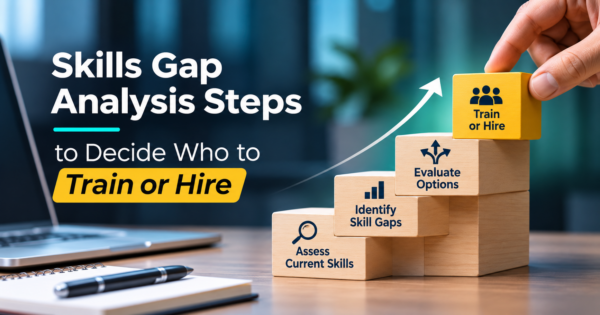
Six steps. Most weak programs skip step 2 or step 6, which leaves the gap with nothing to be measured against and nothing to prove it closed.
- Scope it to a business goal. “Launch the new analytics product by Q3” is a scope. “Assess everyone’s skills” is not. Start with one team or role family.
- Define the required skills and the level each role needs. Take them from job descriptions, the work the goal requires, and the people who do the job well today. Keep the list to the skills that decide results, usually five to ten per role.
- Rate the current level. Use a scale of one to five with written descriptions, as shown below.
- Calculate the gap and a priority score. Gap = required level minus average current level, with a floor of zero. Priority = gap x importance.
- Choose an action for each gap. The table in the action section maps gap shapes to responses.
- Re-measure. Run the same assessment on a schedule and track whether the priority scores fall.
What does a worked skills matrix look like?
The ratings below are our own illustration for an analytics team of five, not real people. Levels run from 1 (aware) to 5 (expert). The required level is what the team’s goal needs.
| Skill | Required | Ana | Ben | Cy | Dee | Eli | Team average | Gap | Importance (1-5) | Priority (gap x importance) | People below required |
|---|---|---|---|---|---|---|---|---|---|---|---|
| SQL | 4 | 4 | 5 | 3 | 4 | 2 | 3.6 | 0.4 | 2 | 0.8 | 2 of 5 |
| Dashboard design | 4 | 3 | 4 | 2 | 4 | 3 | 3.2 | 0.8 | 5 | 4.0 | 3 of 5 |
| Statistics | 3 | 3 | 2 | 3 | 4 | 1 | 2.6 | 0.4 | 3 | 1.2 | 2 of 5 |
| Data governance | 3 | 2 | 3 | 1 | 2 | 2 | 2.0 | 1.0 | 3 | 3.0 | 4 of 5 |
| Stakeholder communication | 4 | 4 | 3 | 3 | 2 | 3 | 3.0 | 1.0 | 5 | 5.0 | 4 of 5 |
Ranked by priority score, the order is: Stakeholder communication (5.0), Dashboard design (4.0), Data governance (3.0), Statistics (1.2), SQL (0.8). Three things stand out.
- The weakest average is not the top priority. Data governance has the lowest average, 2.0, but stakeholder communication has the same gap of 1.0 and a higher importance rating (5 against 3), so it comes first.
- Averages hide shape. SQL has a gap of 0.4 but only 2 of 5 people are below the required level. That is a coaching problem, not a team training program.
- Surplus is an asset. Ben is a 5 in SQL against a required 4. A negative gap needs no action, but it names a mentor.
How do you rate skills fairly?
Write what each level looks like in behavior, for every skill you assess. Here is an example for stakeholder communication.
| Level | Label | What it looks like |
|---|---|---|
| 1 | Aware | Understands why stakeholder updates matter; needs prompting to send them |
| 2 | Developing | Sends clear updates on own tasks; struggles to adapt them to the audience |
| 3 | Competent | Adapts content and detail to the audience; raises risks before they become issues |
| 4 | Advanced | Runs stakeholder meetings, resolves disagreements and sets expectations early |
| 5 | Expert | Builds executive-level alignment on ambiguous goals and coaches others |
Then choose how to gather the ratings. Combine at least two methods, because each has a bias.
| Method | Strength | Risk | Best for |
|---|---|---|---|
| Self-assessment | Cheap; employees know their own gaps | Over- and under-rating | Starting point and development conversations |
| Manager rating | Ties to observed work | Manager bias; limited view of each skill | Role-level skills |
| Skills test or practical task | Objective for technical skills | Time to build; test anxiety | SQL, coding, tool proficiency |
| 360 feedback | Shows behavioral skills others see | Needs anonymity and trust | Communication, leadership |
| Work samples and performance data | Based on actual output | Hard to standardize across roles | Validation of the other methods |
How do you turn a gap into an action?
The shape of the gap tells you the response better than its size does.
| Gap shape | Example from the matrix | Usual response |
|---|---|---|
| Wide and needed soon | Many people below the level on a skill the goal needs now | Team training plus a short-term hire or outside help |
| Narrow, one or two people | SQL: two of five below required | Individual development plan, mentoring by someone with surplus |
| Small gap, lower importance | Statistics: gap of 0.4, priority 1.2 | Schedule for the next planning cycle; track |
| Needed rarely or only for a project | A niche modeling skill | Contract or staff augmentation rather than a hire |
| Repetitive and rule-based | Manual data governance checks | Automate the task (see AI workflow automation tools) so the skill is less critical |
Where can AI help with a skills gap analysis?
AI is useful for the heavy lifting around the matrix. It can propose a draft skills list from job descriptions and project documents, infer likely skills from résumés, training records and work history, suggest learning content for each gap, and refresh a dashboard as new data arrives. Our guide to AI in HR covers the wider set of HR workflows.
Treat the output as a draft. Inferred skill levels are probabilistic and can encode bias from the data they were trained on. Confirm ratings with the employee and the manager, tell people what data you use and how results will be used, check local rules on employee data, and avoid using skill scores alone for pay, promotion or termination decisions. Questions about legal requirements go to your counsel.
How do you keep a skills matrix current?
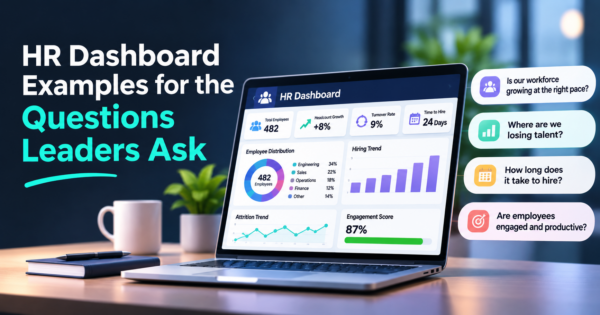
A matrix kept in a spreadsheet goes stale within a quarter. The sustainable version pulls from the systems that already hold the evidence: the HRIS for roles, the learning platform for completed courses, the performance process for ratings, and project tools for the work done. Show the output on an HR dashboard with the gap, the priority score and the trend, as in our HR dashboard examples, and pair it with the engagement signals in employee engagement metrics. For new hires, employee onboarding software can assign the learning that closes known gaps from day one. Our business intelligence dashboard services team builds these views.
What mistakes make a skills gap analysis fail?
| Mistake | What happens | Fix |
|---|---|---|
| No business goal | Everything looks like a gap | Scope to one goal and one team |
| Unanchored scale | Ratings differ by manager | Write behaviors for each level |
| Averages only | Individual coaching needs are hidden | Show people below required, not just the mean |
| Ignoring importance | Time goes to the lowest score, not the biggest risk | Multiply gap by importance |
| One-time exercise | The matrix is out of date within months | Re-run on a fixed schedule |
| Gap equals training | Wrong fix for rare or repetitive skills | Match action to the shape of the gap |
Frequently Asked Questions
What is a skills gap analysis?
It is a comparison of the skills an organization needs with the skills its people have now, usually by role or team. The difference for each skill is the gap, and ranking gaps by importance shows where to train, hire or automate first.
How do you do a skills gap analysis?
Scope it to a goal, define the required skills and level for each role, rate current levels with a written scale, calculate gap and a priority score, choose an action for each gap and repeat on a schedule. The worked example above shows each calculation.
How do you calculate a skills gap?
Subtract the team’s average current level from the required level, with a floor of zero. Multiply the gap by an importance rating to get a priority score, and also count how many people are below the required level.
What are examples of skill gaps?
Common examples are data analysis in teams that now rely on dashboards, stakeholder communication in technical teams, cloud or security skills after a migration, and AI tool proficiency as workflows change.
What is the difference between a SWOT analysis and a gap analysis?
A SWOT analysis lists strengths, weaknesses, opportunities and threats for an organization or project. A gap analysis compares a current state with a target state and measures the difference, which makes it more specific for skills planning.
How long does a skills gap analysis take?
A focused analysis for one team can take a few weeks, mostly spent agreeing on required skills and collecting ratings. Company-wide programs take longer and work best when built in phases.
Can ChatGPT do a skills gap analysis?
It can help draft a skills list, a rating scale and a learning plan from information you provide. It cannot know your people’s real skill levels, so ratings need to come from assessments, managers and employees, and any output should be reviewed by a person.
What is the best way to close a skills gap?
It depends on the shape of the gap. Train the team when many people are below the level, coach or mentor individuals when a few are, hire or contract when the skill is needed soon or rarely, and automate repetitive tasks.
How often should you repeat a skills gap analysis?
At least once a year, and also after a major change such as a new strategy, product or technology. A dashboard fed by your HR and learning systems keeps the matrix current between formal reviews.
Bottom Line
A skills gap analysis is worth doing when it is tied to a goal, scored on a written scale, and ranked by importance rather than by the lowest average. Pick the action to match the shape of the gap, keep the data fresh from your HR systems, and use AI to draft and refresh, not to decide. If you want a skills matrix connected to your HRIS, learning platform and reporting, talk to us about AI integration services or our AI automation team.