Table of Content

What is an offshore development center?
An offshore development center (ODC) is a dedicated software team, based in another country, that works as an extension of your company. You decide the roadmap and priorities, and the team builds, tests and maintains your product, either under a vendor who employs and manages the people or under a structure you own. It differs from one-off outsourcing because the same people stay on your product over time. It tends to beat in-house hiring when you need more engineering capacity for a sustained period, and it tends to lose when the work is small, short or needs constant in-person collaboration.
TL;DR
- An ODC is a long-term dedicated team abroad, not a one-off project vendor. You direct the work and the team learns your product.
- There are four common models: a vendor-managed dedicated team, build-operate-transfer (BOT), a captive subsidiary and staff augmentation. They differ in who employs the people, how much you control and how much risk you carry.
- A worked three-year cost model below compares a six-developer in-house team with an ODC, using placeholder numbers. It also shows what happens when the offshore team is slower than assumed.
- The saving is real in most models but smaller than the headline rate gap, because management, travel, setup and ramp-up add cost.
- The decision usually turns on four things: how long you need the capacity, how clear your requirements are, how much management time you can give and how sensitive your IP and data are.
- The salary, rate and productivity numbers in the worked examples are placeholders to replace with real quotes, not market data.
- CommercePundit provides dedicated development teams. See the last section.
How does an offshore development center work?
The team is dedicated to your product. You keep the roadmap, the code and the relationship with your customers.
The team works in your repositories, your issue tracker and your communication tools, following your process or one you agree together. The center is usually run by a delivery lead who handles hiring, retention and day-to-day coordination, so you are not managing individual employment in another country.
What are the models for an offshore development center?
| Model | Who employs the team | Control | Your risk | Good fit |
|---|---|---|---|---|
| Vendor-managed dedicated team | The vendor | Direct the work; vendor manages people | Lower: the vendor handles hiring and local compliance | Most companies starting out |
| Build-operate-transfer (BOT) | The vendor, then you take over | Grows over time; full control after transfer | Medium: you inherit the entity and staff at transfer | Companies planning to own a center eventually |
| Captive subsidiary | You | Full | High: legal entity, hiring, payroll and compliance are yours | Large companies with long-term scale |
| Staff augmentation | The vendor; individuals join your team | High for those individuals | Lower, but less continuity than a team | Filling specific skill gaps |
If you only need one or two specialists, read our guide to staff augmentation and how to hire dedicated developers. A full ODC makes sense when you need a team, not individuals.
Worked example: three-year cost of six developers, in-house vs offshore
All inputs are placeholders: $150,000 a year fully loaded per in-house developer, recruiting at 20% of one year per hire, an offshore price of $55,000 per developer per year, $40,000 setup, an onshore manager spending half their time on the team at $140,000 a year, and $30,000 a year of travel. Replace every number with real quotes.
| Cost line | In-house (6 developers) | ODC (6 developers) | ODC if only 80% as productive |
|---|---|---|---|
| Developer cost over 3 years | $2,700,000 | $990,000 | $1,237,500 (7.5 developers) |
| Recruiting | $180,000 | $0 | $0 |
| Setup | $0 | $40,000 | $40,000 |
| Onshore management | Included in loaded cost | $210,000 | $210,000 |
| Travel | $0 | $90,000 | $90,000 |
| Total | $2,880,000 | $1,330,000 | $1,577,500 |
On these inputs the ODC saves $1,550,000 over three years (54%), and still saves $1,302,500 (45%) if the offshore team needs 7.5 developers to match six. The offshore price would have to rise to about $112,889 per developer per year before the 80% productivity case stops saving money. The result is sensitive to the productivity assumption, which is why a pilot is worth more than a spreadsheet.
When does an offshore development center make sense?
| Situation | ODC fits? | Why |
|---|---|---|
| Sustained need for six or more engineers | Yes | The setup cost spreads over a long period |
| A product roadmap you can write down | Yes | The team can work from a backlog without daily explanation |
| A single two-month project | Usually no | A project vendor or contractors cost less to start and stop |
| Work that needs constant in-person collaboration | Usually no | Time zone and distance add friction |
| Highly sensitive data or IP with strict residency rules | Check first | Law and contract may restrict where data can go |
| A startup building the first version | Maybe | See our MVP development guide; a small dedicated team or a project vendor may be a better first step |
| A legacy system that needs modernizing | Often yes | Long, steady work suits a dedicated team; see legacy system modernization |
What are the risks, and how do you manage them?
| Risk | What goes wrong | Mitigation |
|---|---|---|
| Intellectual property | Unclear ownership of code or leaks | Contract assigns IP to you; code lives in your repositories; access control and audit |
| Data security and privacy | Customer data handled under different rules | Limit data access; use masked test data; review applicable law and contract terms |
| Time zone gap | Questions wait a day | Agree overlap hours; write clear tickets; keep a daily handoff |
| Turnover | Knowledge leaves with people | Documentation, pairing and a retention clause in the contract |
| Communication drift | Requirements are misunderstood | Short sprints, demos every cycle, written acceptance criteria |
| Vendor dependence | Switching is painful | Own the repositories, infrastructure accounts and documentation |
| Hidden costs | Management and rework eat the saving | Budget management time; start with a pilot |
How do you set up an offshore development center?
| Step | Do this | Done when |
|---|---|---|
| 1. Define scope | Write the roadmap, team skills needed and the length of commitment | A one-page brief exists |
| 2. Shortlist partners | Check references, team stability and how they handle security; compare against alternatives such as custom software development companies | Two or three candidates |
| 3. Run a pilot | A paid pilot of one to three months with a real deliverable | You can compare quality and speed against expectations |
| 4. Agree the contract | IP assignment, data handling, notice period, team continuity and knowledge transfer | Signed with exit terms |
| 5. Onboard | Give access to code, tools and documentation; run a kickoff | The first sprint ships something real |
| 6. Operate | Weekly demos, quality metrics and a monthly review; see project management dashboard for tracking ideas | Both sides review the same metrics |
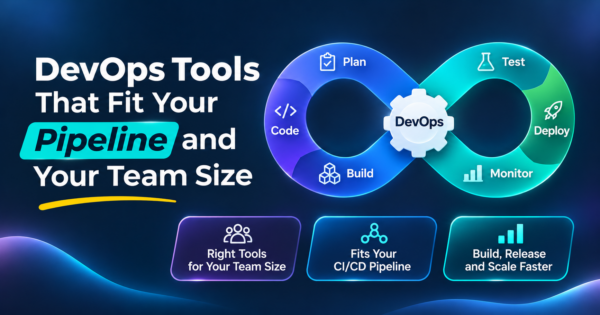
Choose the way of working together before you scale. Our DevOps tools guide covers the build and release pipeline a distributed team needs, and hiring React developers is a good example of hiring for one skill.
What mistakes cause offshore centers to fail?
| Mistake | What happens | Fix |
|---|---|---|
| Choosing on price alone | Low quality and high turnover cost more later | Compare team stability, security and references |
| No product owner on your side | The team guesses priorities | Name one owner with decision authority |
| Skipping the pilot | Problems appear after you scale | Run a paid pilot first |
| Weak documentation | Knowledge walks out the door | Make documentation part of the definition of done |
| Vague contract | IP and exit terms disputed | Write IP assignment, data and exit terms clearly |
| Treating the team as a vendor, not a team | Low engagement and motivation | Include them in planning, demos and goals |
Frequently Asked Questions
What is an offshore development center?
It is a dedicated software team in another country that works as an extension of your company on a long-term basis. You direct the work, and the team builds, tests and maintains your product.
What is the difference between an offshore development center and outsourcing?
Traditional outsourcing hands a defined project to a vendor. An ODC is a dedicated team that stays on your product, follows your process and builds knowledge of your system over time.
What are the models of offshore development centers?
The common models are a vendor-managed dedicated team, build-operate-transfer, a captive subsidiary and staff augmentation. They differ in who employs the people, how much control you have and how much legal and operational risk you carry.
How much does an offshore development center cost?
It depends on team size, skills, location and model. Build a three-year model with vendor quotes, adding setup, management time, travel and an allowance for lower early productivity before you compare with in-house costs.
Is an offshore development center cheaper than hiring in-house?
Often, over a sustained period, but the saving is smaller than the headline rate difference because management, setup, travel and ramp-up add cost. A pilot and a sensitivity check on productivity give a reliable answer.
How do you protect intellectual property in an ODC?
Assign IP to your company in the contract, keep code in repositories you own, control access, limit sensitive data and audit activity. Have a lawyer review the agreement for the countries involved.
What is build-operate-transfer?
A model where a partner sets up and runs the center for an agreed period, then transfers the entity, staff and operations to you. It suits companies that want to own a center eventually without building it alone.
What are the disadvantages of an offshore development center?
Time zone gaps, communication drift, turnover, vendor dependence and security concerns. All can be managed with clear processes, strong documentation, overlap hours and a good contract.
How long does it take to set up an ODC?
It depends on the model and team size. A vendor-managed team can often start from an existing bench within weeks, while a captive subsidiary takes much longer because of entity setup and hiring.
When should a startup use an offshore team?
When it has a clear roadmap and needs engineering capacity for months, not weeks. Start with a small paid pilot and keep the code in your own repositories.
Bottom Line
An offshore development center is a bet on sustained capacity. It pays off when you have a clear roadmap, a long runway and someone on your side to own priorities. Model the real cost, test with a pilot, protect your IP in the contract and keep the team close to the product. If you want a dedicated team that works in your tools and repositories, see our custom web development services.